You're packing a customer's skincare order from WhatsApp, then you notice three similar serums on the shelf and can't tell which batch should go out first. If you've been asking how to track expiry dates for skincare inventory, the real problem is usually this: old and new stock got mixed together, and now you're relying on memory, handwritten dates, or hope.
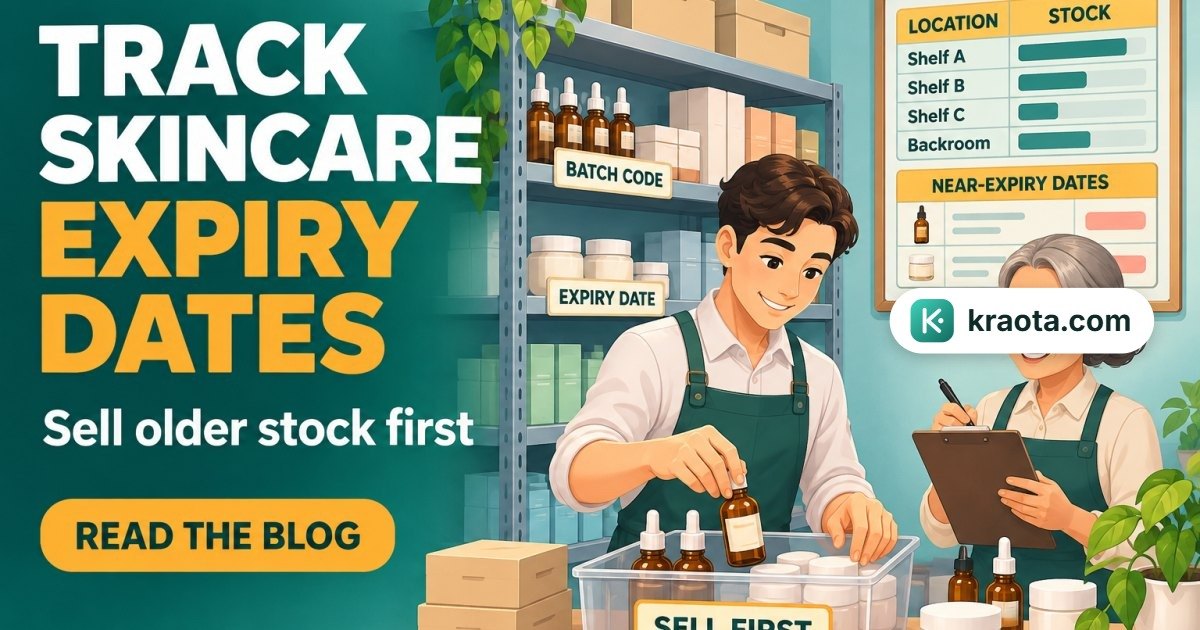
The short answer to how to track expiry dates for skincare inventory is to record each batch with its expiry date, then always sell the one that expires first. DCL Corp says this method is called FEFO, first-expire, first-out, and it matters for skincare because safety and product potency are tied to shelf life.
By the end of this guide, you'll know how to track skincare expiry dates online, organise batch tracking for beauty products, use skincare stock expiry alerts, and stop guessing which product should leave your shelf first.
How to track expiry dates for skincare inventory without confusion
The simplest answer is this: record every skincare item by batch, expiry date, quantity, and location, not just by product name.
That matters because one product name can hide different stock ages. You might have the same face serum from two deliveries, one batch expiring sooner than the other. If your record only says "Vitamin C Serum, 12 pieces," you still won't know which ones should leave your shelf first.
A simple expiry date management for skincare stock should keep these details for every batch:
- Product name
- Batch or lot number
- Expiry date
- Quantity received
- Where it is stored
- Date received
You can keep this in a spreadsheet or use a system that lets you track skincare expiry dates online, as long as each batch is separate.
DCL Corp says FEFO, first-expire, first-out, works better than ordinary FIFO for skincare because shelf life affects product safety and potency. So the goal is not just tidy records or better batch tracking for beauty products. The real goal is knowing, every day, which cleanser, serum, or cream should be sold first before it sits too long.
Why skincare sellers need FEFO, not just first in first out
FIFO means first in, first out. FEFO means first expire, first out. For skincare, FEFO is the one that matters most.
Here's why. You can receive stock later that expires sooner. For example, you restock body lotion in July, but that new carton has an earlier expiry date than the one already on your shelf. If you sell by arrival date alone, you may keep pushing the July stock to the back because it came in later, even though it should leave first.
DCL Corp recommends FEFO as a best practice for expiring inventory, especially in beauty categories like skincare, because safety and potency are tied to shelf life. That matters when you sell serums, creams, sunscreens, and cleansers. Customers expect fresh products. You also want less waste from items quietly expiring in a drawer or store shelf.
So FEFO for skincare inventory is simple in practice. Look at the batch that expires sooner, and sell that one first, no matter when it arrived.
If you want help doing that consistently, Kraota supports earliest-expiry-first selling, so the batch that expires sooner is the one you are guided to sell first. You can see it on Kraota's batch and expiry tracking features.
What is the best way to record skincare batches and expiry dates
The best workflow is simple. When new stock arrives, don't mix it straight into the shelf. Keep the new cartons aside, check each product label, record the batch number and expiry date, then place the items into the right shelf or bin.
That step matters more when you're selling from Instagram, WhatsApp, and a physical shop at the same time. A notebook can miss details. Memory is worse. You reply a DM, attend to a walk-in customer, then later you can't remember whether the Vitamin C serum on Shelf B is the older batch or the one that came in last week.
A good rule is to make your physical setup match your digital record. If one batch is in Bin 2 or on the top shelf, record it that way. If you have more than one branch or pickup point, record each location separately too. That is what makes batch tracking for beauty products useful in real life, not just on paper.
In Kraota, you can keep batch records with expiry dates, add products by scanning a barcode with your phone camera or a scanner, and store stock per location so your shelf reality matches your records. If you want help setting it up, the guide is a good place to start.
How do you stop old and new skincare stock from getting mixed up
Start with simple shelf rules and stick to them. Keep batches separate. Label the receiving date clearly. Put the units with the earlier expiry in front, and the later batch behind them. That is the easiest way to practise FEFO for skincare inventory without overthinking it.
A small routine helps more than a big cleanup once a month. Check your shelves once or twice a week and pull out anything getting close to expiry. According to DCL Corp, FEFO means products with the earliest expiry dates should be sold and shipped first, not just the ones that arrived first. That matters for expiry date management for skincare stock, especially when two batches land at different times.
This discipline is not only for shops with long aisles. If you sell mostly on Instagram, WhatsApp, or Facebook, your dispatch shelf, drawer, and backroom cartons can still get mixed up fast.
If you keep stock in more than one place, separate that too. Kraota helps by tracking inventory per location, so if you keep stock in a shop, storeroom, or another branch, you can see which location holds the batch that should sell first. That makes skincare stock expiry alerts and batch records easier to act on, not just record.
How can expiry alerts help online skincare sellers
Expiry alerts are there to pull your attention to stock that needs action before it turns into dead stock. Instead of checking every shelf, drawer, and carton by hand, you get a prompt that says, in effect, "look at these ones now."
That matters when you're selling from Instagram, WhatsApp, or Facebook, because stock can sit quietly in the back while you focus on orders and messages. Research from BEEP shows alerts are a common part of expiry tracking tools because they cut down the need for constant manual shelf checking. ExpiryCare also describes reminder-based tracking for products nearing expiry.
Once an item is getting close, the next step is practical, not dramatic. You can:
- feature it in your online catalog first
- mention it in your WhatsApp status or customer update
- bundle it with a faster-moving item
- pause or slow down reordering that same product
Kraota includes expiry alerts, so you do not have to rely on memory or keep flipping through a notebook to remember which creams or serums need attention soon. That makes track skincare expiry dates online easier, especially when you have several batches moving at once.
What should you do when a customer orders a skincare product online
When an order drops on WhatsApp or Instagram DM, don't pack the nearest product and move on. Use a simple routine every time: confirm the exact item, check which batches are available, pick the earliest-expiry batch that is still valid, then pack it.
That is the heart of FEFO for skincare inventory. DCL Corp says FEFO means you ship the product with the earliest expiry date first, not just the one that entered your shop first. For skincare, that matters because two jars of the same cream can look identical on the shelf but have different batch dates.
This is where mistakes happen most. Social orders come fast, somebody is asking for account number, another person is sending delivery address, NEPA has gone, and old and new stock get mixed during the rush.
Keep one rule across every kind of sale. Whether the order becomes a sales order, an invoice, or a normal POS sale, the picking step should stay the same.
For example:
- Vitamin C serum 30ml
- Batch A, expires March 2027
- Batch B, expires November 2027
If both are available and valid, ship Batch A first.
Kraota is useful here because sales orders, invoices, and POS selling can work with batch records and earliest-expiry-first selling, which helps the right skincare batch go out first. That makes batch tracking for beauty products easier, even when orders are coming from chat.
How to start tracking expiry dates for skincare this week
Start small, but start properly.
This week, pick your top 20 skincare products and work through them one by one. Begin with fast-moving and high-risk items like serums, sunscreens, creams, and anything you buy in multiple batches.
Use this simple checklist:
- List your top 20 products
- Separate the current batches on your shelf or in storage
- Record each batch and its expiry date
- Mark items that are getting close to expiry
- Tell your team which batch should sell first
That one step already cuts down confusion. You can see what must move first, instead of guessing from memory or old WhatsApp chats.
Stick to one system. It can be a notebook, a spreadsheet, or a proper tool, but everyone on your team should use the same method every time a product comes in or goes out.
If you want one place to track batches, expiry dates, alerts, and earliest-expiry-first selling, start a 14-day free trial of Kraota at https://kraota.com/register. You can also check the plans at https://kraota.com/pricing.
Start a 14-day free trial of Kraota and set up your skincare batches, expiry dates, and alerts in one place.