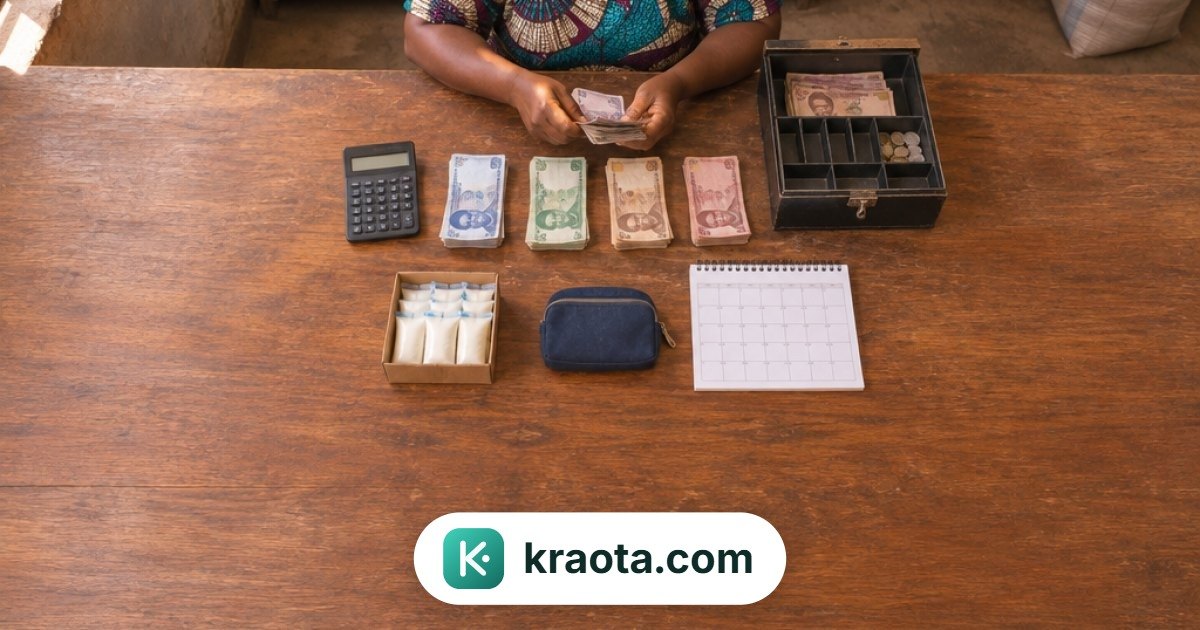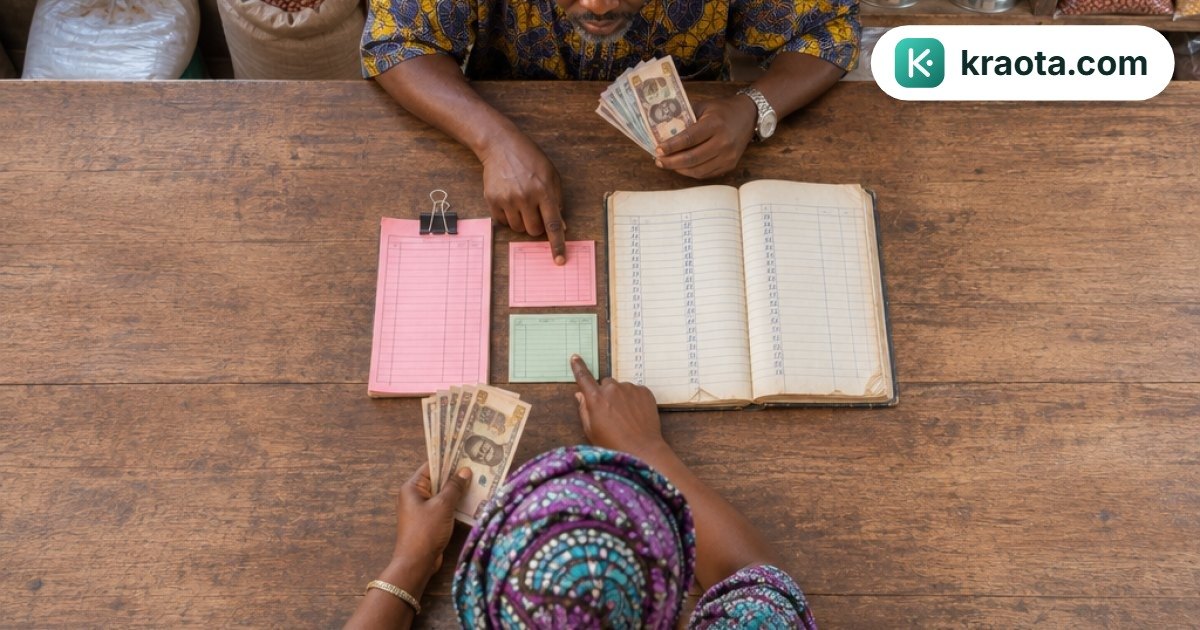
A customer is standing at your counter saying, "I transferred part of this money last week," while you turn notebook pages and the queue behind them grows. If you're wondering how to keep records of customers owing money, start with one clear record that connects each credit sale, payment and remaining balance.
The trouble starts when the sale is in your notebook, the transfer proof is buried in WhatsApp, and nobody wrote down which debt the payment covered. Now you and your customer have different balances.
By the end of these six steps, you'll know what to record, how to record part-payments, what to check when a payment is disputed, and how to move existing debts out of your notebook.
How do you keep customer debt records without a notebook?
When that customer reaches the counter, you need to find their balance without searching through WhatsApp chats. Keep each credit sale on an invoice, record every payment against the correct invoice, and update the remaining balance.
You can use a spreadsheet or invoicing software, but your customer payment records should answer three questions: What did they buy? What have they paid? What is still outstanding? Keep the original sale amount visible rather than replacing it with the latest balance.
For example, if a customer buys goods worth ₦30,000 and pays ₦10,000, the record should show all three figures: ₦30,000 sold, ₦10,000 received and ₦20,000 outstanding.
That outstanding ₦20,000 is part of your receivables, which simply means money customers still owe your shop. It isn't cash you've received. Keeping the sale and its payments separate helps you see both what you sold and how much money has actually come in.
What details should you record when a customer buys on credit?
A customer is waiting to collect their goods, and you quickly write "Aunty Ngozi, balance remaining". But which Ngozi, and which purchase? Record enough detail to identify both the customer and the sale.
Use this compact invoice checklist whenever you sell on credit:
- Customer name and contact: Full name and a phone number you can reach.
- Unique invoice reference: Give each sale its own reference.
- Sale date: When the customer bought the goods.
- Items supplied: Product names, quantities and prices.
- Total amount: The full value of that sale.
- Agreed payment date: A specific date, not just "next week".
Keep a separate payment log, with one entry for each payment received. This simple customer debt record template works alongside your invoices:
| Invoice reference | Payment date | Amount received | Payment method | Payment reference |
|---|---|---|---|---|
| For example: INV-024 | 8 July | ₦5,000 | Bank transfer | Bank transaction reference |
Names alone aren't enough. Two customers may share a name, and one customer may have several unpaid purchases. The invoice reference tells you exactly which purchase a payment reduces.
Keep the invoice and its payment entries connected, rather than scattering them across WhatsApp chats, a notebook and someone's memory. Kraota supports customers, invoices, part-payments and receivables through its invoicing and receivables features. Use the checklist above to review what you're recording before your next credit sale.
How do you record part-payments without losing the balance?
A customer sends a transfer while you're serving someone else and says, "Remove it from what I owe." Record that payment as its own dated entry against the correct invoice, then calculate what's left.
The formula is: invoice total minus payments received equals balance, assuming there are no returns or other adjustments. Always subtract all payments received against that invoice, not just the latest one.
For example, a customer has a ₦45,000 invoice and makes payments of ₦15,000 and ₦10,000 on separate dates:
| Transaction | Payment received | Remaining balance |
|---|---|---|
| Original invoice | ₦0 | ₦45,000 |
| First payment | ₦15,000 | ₦30,000 |
| Second payment | ₦10,000 | ₦20,000 |
Here, ₦45,000 minus total payments of ₦25,000 leaves ₦20,000 outstanding.
Keep both payment entries, including their dates, methods and references, linked to that invoice. Don't cross out the old figure and replace the history with a handwritten new balance. If the customer questions the amount later, you need to show how you reached it.
When someone has several unpaid invoices, agree which invoice their payment reduces before recording it. Ask, "Is this for your earlier purchase or the latest one?" If it covers more than one invoice, record how much goes towards each.
In Kraota, invoices and part-payments let you keep the purchase and its payments connected, while receivables help you see what remains owed. For your next part-payment, record it against the agreed invoice before moving on to the next customer.
What should you check when a customer says they've already paid?
A customer holds out their phone at the counter: "I sent part of that money last week." Before asking them to pay again, say, "Let's check the payment date, amount and reference together."
Start with those details, then compare them with your own bank statement or payment records. Check the receiving account too, especially if your shop uses more than one. For a cash payment, look for the receipt or cashier's entry for that date.
Once you find the payment, check which invoice it was recorded against. The money may have arrived but been left unrecorded, or it may have reduced a different invoice. Don't add it again if it's already in your customer payment records.
If you confirm a missed payment, record its date, amount, method and reference against the relevant invoice. Share the corrected balance with the customer and acknowledge the mistake plainly: "You're right, we received it but hadn't recorded it here."
A screenshot or WhatsApp message helps you trace a payment. It doesn't replace confirming receipt in your own records and updating the invoice.
If you still can't confirm it, explain what remains unchecked: "I haven't found this reference in our account yet. I'll check with the cashier and update you this afternoon." Give a timeframe you can keep, without accusing the customer.
How often should you review money customers owe you?
Before you close the till, check that the part-payment you received this afternoon is recorded against the right invoice. Keep this rhythm: record payments when received, check the day's entries before closing, and review unpaid invoices weekly.
Don't leave payment entries until your weekly review. Record each confirmed payment against its invoice when it arrives. Before closing, check that the day's credit sales and payments are entered, with updated balances.
Choose a fixed weekly slot for tracking unpaid invoices, perhaps before opening on a quieter morning. Review each customer's total balance, then look at the individual invoices behind it. Check what remains unpaid on each invoice and its agreed payment date, so you can distinguish money due soon from money already late.
After checking your records, send a polite, factual reminder. For example:
"Hello [customer name], our records show ₦[outstanding amount] outstanding on invoice [invoice reference], with payment agreed for [agreed date]. Please confirm when we can expect payment. Thank you."
A spreadsheet can hold these records if someone updates it consistently. But keeping sales and payments in separate records means more work matching entries and checking balances.
Kraota's receivables let you see who owes you money, alongside its invoices and part-payments. You'll still need a regular review routine.
Set your weekly review time now, and put it in your calendar.
How do you move existing customer debts out of your notebook?
Your notebook shows an unpaid purchase, but there's a receipt tucked between the pages. Start with that one customer, not the whole book. Gather their notebook entries, invoices, receipts and confirmed payment records before calculating what remains unpaid.
Match each payment to the purchase it settled. For example, if an invoice was ₦40,000 and you've confirmed a ₦15,000 payment against it, the remaining balance is ₦25,000. Keep the payment date and reference beside that invoice.
Where a part-payment is unclear, check with the customer and look for supporting records. If you still can't resolve it, mark the amount as "needs checking" and note what's missing. Don't turn a guess into an agreed debt.
Next, choose a clear changeover date. Keep a short handover list showing which older invoices still need attention and where each will be managed. Don't treat an old unpaid purchase as a new sale, or leave the same invoice on two active debt lists and add both balances together. Keep the notebook as a reference.
Switching tools won't repair incomplete records by itself. Once you've checked the underlying details, Kraota gives you a place to manage invoices, record part-payments and see receivables, so you can follow what's still owed.
Today's task is small: prepare one customer's verified invoice and payment details, including the remaining balance. Have those records beside you when you try the workflow.
Start Kraota's 14-day free trial and try tracking one customer's invoice, part-payment and remaining balance.